



Self-Clinching Studs
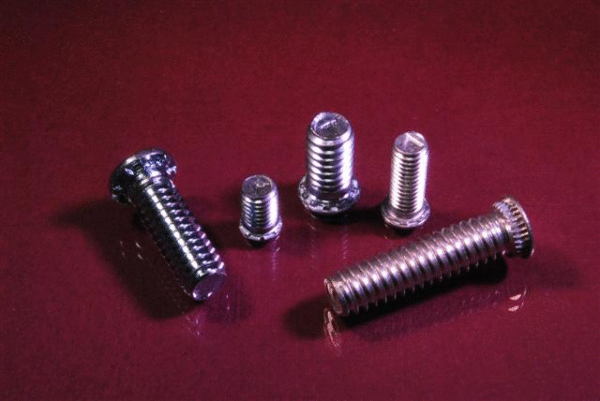


Monroe-JHP Fasteners supplies self clinching studs, an equivalent to PEM® Studs, in a range of sizes and styles. Aluminum, steel, and stainless steel varieties are available to meet the specific needs of your application. Inch or metric threads are available.
A self clinching stud, also referred to as a press fit stud, a press in stud, or a clinch stud, is designed to become a permanent fixture of the part, component, or device onto which it’s installed. Installation is usually performed during the initial fabrication stage or in final assembly of the metal chassis. Parallel squeezing force is applied in order to secure the stud to the sheet metal panel.
Monroe JHP offers a wide variety of clinch studs for industrial use. Our Flush Head self clinching studs or more commonly referred to as FH self-clinching studs, are great for ductile steel and aluminum panel installation. Stainless steel self clinching studs are designed for permanent fixtures, and we sell a wide range of sizes and alloys for these as well. No matters what style of self clinching stud you need Monroe-JHP Fasteners has you covered. Contact us today to place your next order.


Press-In Stud Advantages
Press-In studs are designed, engineered, and manufactured to be permanently mounted to metal framework, reducing costs and assembly time by eliminating the necessity for loose hardware and additional installation processes. Self clinching studs are used for varying purposes, though all varieties are built to withstand high levels of torque, heavy weights, and constant, repeated pull by the attached components. Additional press-in stud benefits, include:
- Superior strength
- High pushout and torque-out resistance
- Does not require special hole prep before installation
- Installed directly without chamfering or deburring
- Does not require re-tapping after installation
- Reverse side of metal sheet remains flush after installation
Clinch Studs Installation
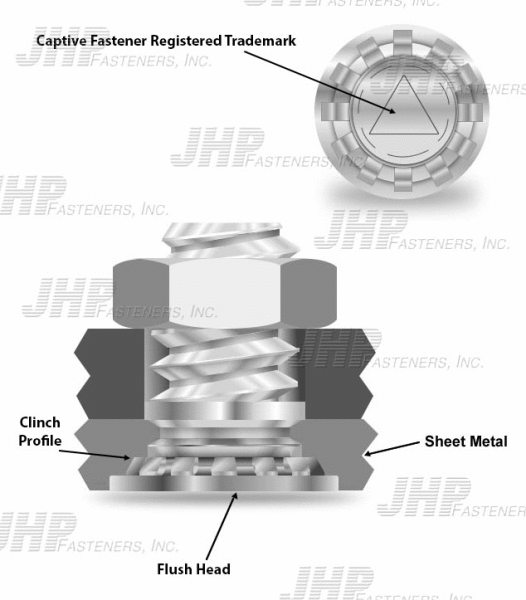
When installing a self-clinching stud, certain tolerances must be adhered to. The most important factors to consider when installing self clinch studs are the ductility, thickness, and hardness of the sheet metal framework. A cold flow process between the chassis material and the fastener material causes the chassis metal to wrap around the clinch profile of the stud, securing it and locking the fastener in place. Using a material that is too thin or too hard will prevent the self-clinching process from working correctly.
Self Clinching Captive Studs vs. PEM® Studs*
Since 1987, Monroe JHP Fasteners has been selling Captive Fastener’s press in studs and other self-clinching hardware. In those 25-plus years, we’ve found that Captive’s products are as good as or better than the similar, but more well-known, PEM® studs, no matter the application.
When comparing dimensions, geometry, and durability, Captive Fastener’s self-clinching studs are an ideal alternative to PEM® studs. When comparing quality and value, Captive products have proven to be the better option. Make Captive Fasteners your new fastener solution and you’ll quickly discover why we’ve chosen them as the sole supplier of our press fit studs. Learn more about the Captive Fastener equivalent for the PEM series.
Press Fit Stud Material Types
| Steel | Stainless Steel | 400 Series Stainless Steel | Aluminum | Phosphor Bronze | |
|---|---|---|---|---|---|
| Flush head studs | X | X | X | ||
| Studs for stainless steel | X | ||||
| Close to the edge studs | X | X | |||
| Studs for thin material | X | X | |||
| High-torque studs | X | X | X | ||
| Large head high-torque studs | X |
Selecting the Right Self Clinch Stud
As a leading fastener supplier, JHP offers press fit studs in a variety of sizes, strengths, and types. Choosing the right one for your needs depends on several factors: the application in which the self-clinching stud will be used, the panel material to which it will be attached, and the components that will be attached to the fastener. Our expert team can help you select the self-clinching stud that will work best for your application.